












An Overview of Data Integration and Analytics
Ashok Dhiman, Director, Enterprise Customer Experience and Data Integration, The Hartford [NYSE: HIG]

Ashok Dhiman, Director, Enterprise Customer Experience and Data Integration, The Hartford [NYSE: HIG]
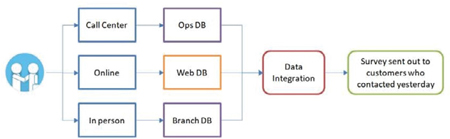
When you started, you only had data from customer’s call center interactions and in-person interactions in the branch.
Designing a “Data integration” solution at this point, you should also take into consideration any other touch-points which might come into the flow in future, like customer online touch-points. Standardize the intake, processing (ETL), cleaning, and enrichment layers so that when you are ready to integrate the online customer interaction data – it’s an agile and cleaner integration.
This is a simpler example; it gets more complicated when you have multiple data sources coming from numerous places within and outside the organization. They might begin as simple ETL project of a couple of data sources, but before you know, it’s a spaghetti of dozens of data sources supporting critical business reports or functions. Hence even smaller Data integration initiatives should accommodate the immediate business requirements but also need to be looked through the lens of long term data and business strategy
 There are quite a few applications out there from big companies like Oracle and Microsoft, which are primarily used on-premise, open-source tools like Pentaho, to cloud-based like Talend. Their choice is dependent on the size of the organization, integration use case, complexity, the business requirement, security or legal requirements and specific nuances of data sources.
When considering a data integration product – make sure that vendor or implementation team understands your company’s current environment which might be ridden with legacy systems, primitive processes, lack of data roadmap, security needs and organizational constraints. Once they have a good understanding of the opportunities and constraints, then the conversation becomes not as much about how good their product is but how can their product be integrated effectively given the opportunities and constraints of the organization.
Well done data integration not only provides ongoing intended business value to the stakeholders but is also operationally efficient, provides proactive alerts when things go wrong, is flexible to enhancements and has technical and process connectors to serve the organization in the long term.
There are quite a few applications out there from big companies like Oracle and Microsoft, which are primarily used on-premise, open-source tools like Pentaho, to cloud-based like Talend. Their choice is dependent on the size of the organization, integration use case, complexity, the business requirement, security or legal requirements and specific nuances of data sources.
When considering a data integration product – make sure that vendor or implementation team understands your company’s current environment which might be ridden with legacy systems, primitive processes, lack of data roadmap, security needs and organizational constraints. Once they have a good understanding of the opportunities and constraints, then the conversation becomes not as much about how good their product is but how can their product be integrated effectively given the opportunities and constraints of the organization.
Well done data integration not only provides ongoing intended business value to the stakeholders but is also operationally efficient, provides proactive alerts when things go wrong, is flexible to enhancements and has technical and process connectors to serve the organization in the long term.
Each Day You Need To Get Data on All the Customer Interactions Which Happened With the Company for That Day and Send Feedback Surveys to Those Customers
There are quite a few applications out there from big companies like Oracle and Microsoft, which are primarily used on-premise, open-source tools like Pentaho, to cloud-based like Talend. Their choice is dependent on the size of the organization, integration use case, complexity, the business requirement, security or legal requirements and specific nuances of data sources.
When considering a data integration product – make sure that vendor or implementation team understands your company’s current environment which might be ridden with legacy systems, primitive processes, lack of data roadmap, security needs and organizational constraints. Once they have a good understanding of the opportunities and constraints, then the conversation becomes not as much about how good their product is but how can their product be integrated effectively given the opportunities and constraints of the organization.
Well done data integration not only provides ongoing intended business value to the stakeholders but is also operationally efficient, provides proactive alerts when things go wrong, is flexible to enhancements and has technical and process connectors to serve the organization in the long term.
